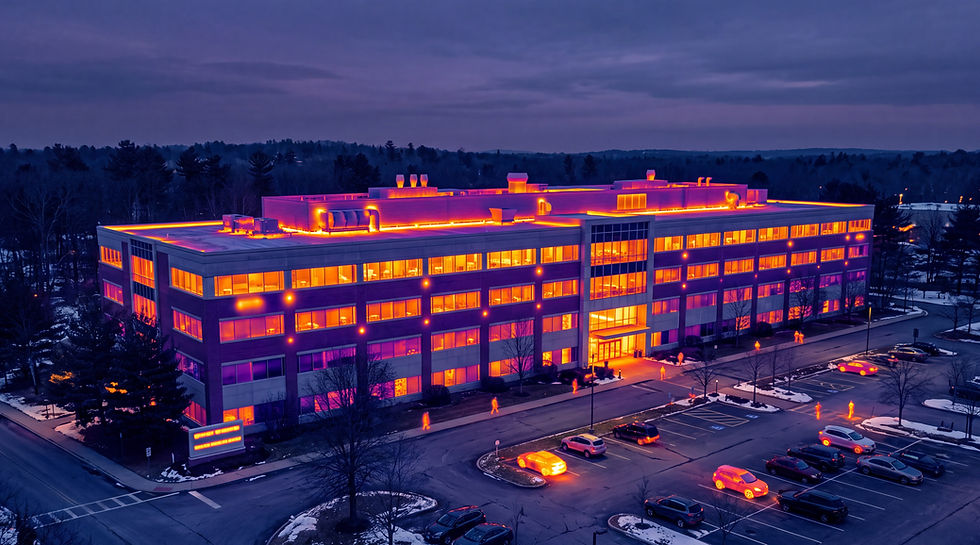
Your Insurer Wants Two Records: The Thermal Scan and the Repair
A thermal scan can feel like the finish line. The carrier asked for an inspection, the inspection happened, and the report is sitting in a folder.
For many carriers, that report is only half of the story. A report that finds a loose connection or an overloaded circuit is a record of a problem. What turns it into a record of a well kept building is the second document: proof that the problem got fixed.
Here is why the repair record matters, what a finished file looks like, and how to keep the two halves from drifting apart.
A report with open findings is a list of known problems
PECO's thermographers are FLIR-certified and NFPA 70B-certified, and every scan comes back as a detailed report with annotated thermal images, notes and recommendations. That is exactly what an inspection should produce.
Read the other way, it is also a dated list of things in your building that were running hot. Left alone, that list does not age well. The finding stays on paper, the connection stays loose, and the next person to open the report sees a problem that was spotted and never closed.
Carriers want to know what happened after the scan
Insurers used to judge electrical risk mostly by a building's age, its use and its claim history. Many now ask for documented inspections showing that the electrical systems meet safety standards.
When a carrier asks for thermal documentation, it usually wants more than the report itself. It wants the inspection reports, proof they came from certified professionals using approved equipment, and follow up documentation showing that any issues were corrected. That last piece is the easiest one to lose, because it happens after the report has already been filed.
The contractor who found it can fix it
A finding is easier to close when nobody has to hand it off. PECO is a commercial and industrial electrical contractor, and the same team that runs the scan handles the repairs it turns up, so you are not left holding a problem with no one to solve it.
That helps the paperwork as much as the building. PECO documents its work for inspections, insurance audits and compliance requirements, and a repair made by the contractor who wrote the finding is simple to match to it.
Keep the scan and the fix in one file
For each building, keep one file that holds the latest report, every repair made against it, and the date each finding was closed. When renewal comes around, that file is the answer, and nobody has to rebuild it from scattered invoices.
If you manage more than one property, the habit matters more. Every building's file should look the same, so anyone who opens it can see what was found, what was fixed and when.
The next scan then does a second job. Most facilities book a thermal scan every year, and some book more often because an insurer or their own safety program asks for it. Each new scan also shows whether the last round of problems stayed fixed.
Start with the report already on your desk
If you have a thermal report with findings that were never closed, that is the place to begin. Building owners, facility teams and insurers in Greater Boston, the North Shore and Eastern Massachusetts already work with PECO on this. See how PECO handles insurance compliance inspections.
Call PECO at (781) 938-6000 to schedule an insurance compliance inspection.